
Coconut Macaroons
An Old Delhi favourite with a surprising history
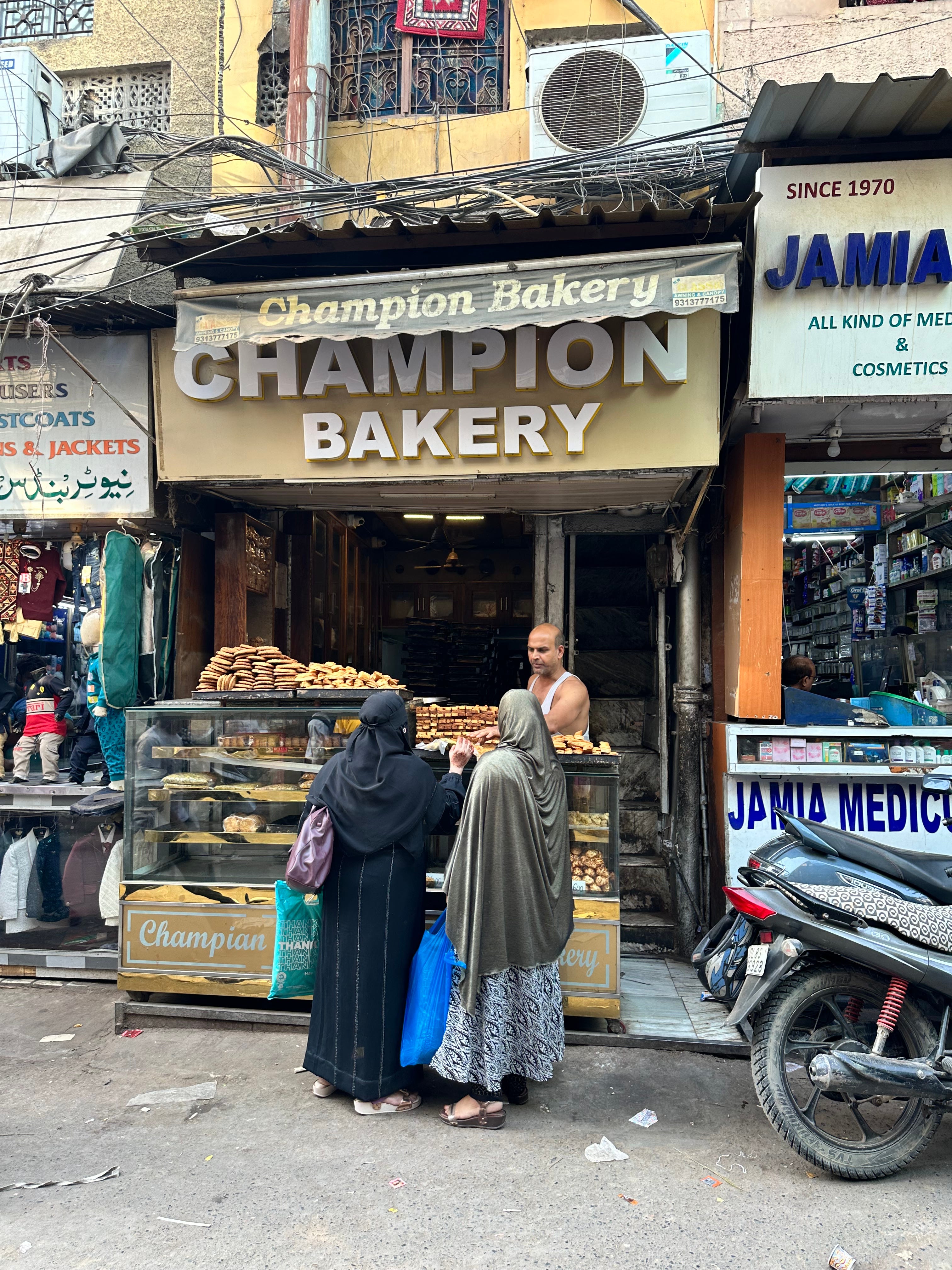
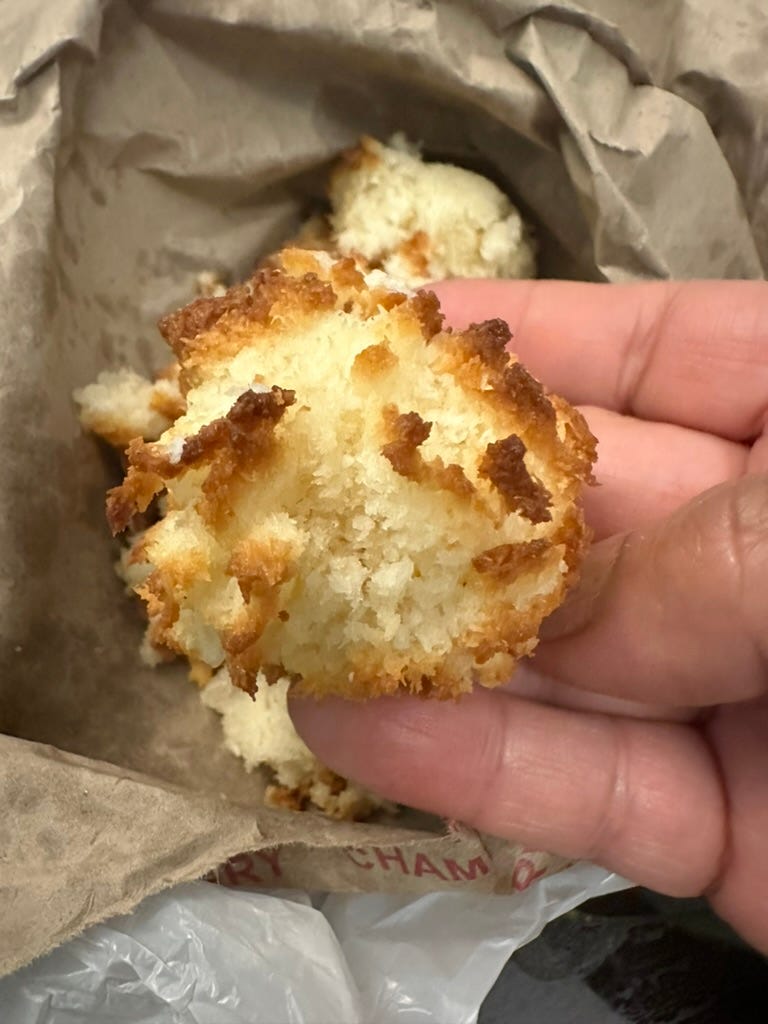
Coconut Macaroons (also known as coconut haystacks) were a treat that we hankered after as children growing up in Delhi in the 70s and 80s. I hadn’t had a good one in years, so imagine my delight when I spotted some in Champion Bakery, a small establishment in Matia Mahal, the narrow street near Jama Masjid in Old Delhi lined with well-known restaurants like Karims. As soon as I saw their golden colour adorning a battered old baking tray brought out by the shopkeeper, I knew I had to buy them. I managed to control the impulse to eat one on the spot and carried the bag a short distance before giving in to temptation, out of the sight of the bakery customers, hidden behind the awning of another shop. As soon as I bit into one, I was instantly transported back to my school days. It reminded me of hot and lazy afternoons with my friends, when we would go to the local bakery and buy just one each, as that was all we could afford with our pocket money. I haven’t eaten coconut macaroons of this calibre for years - made with fresh coconut that has not had the oil taken out of it and baked to perfection.
While fancy bakeries offering exotic cakes, biscuits and breads are popping up all over New Delhi, it is the old-fashioned ones that still offer delicacies of yore, including rusks baked in wood-fired ovens, pineapple pastries and coconut macaroons.
Now, one might wonder where macaroons came from. I had long assumed that biscuits in Delhi were a legacy of British rule, as the Brits are known for their fondness for biscuits. But in this case, the origins were very different.
According to popular accounts, macarons originally came from Italy where they were popular from the 8th Century onwards. They were introduced to France much later in the 16th century when Queen Catherine de’ Medici of Italy married King Henry II of France, and her pastry chefs brought the macaron recipe with them. They were made from almonds, egg white, and sugar. However, food historian Marie Josèphe Moncorgé disputes this account and suggests that pastries with almonds are often of Arabic origin. They likely came to Sicily during the Arab conquests and eventually spread to France.
The Italian name for the biscuits was “maccheroni” because they contained ground nuts, and maccheroni meant sweet or savoury foods made of ground ingredients. Somewhere along the line, almond flour was swapped for ground coconut as the popularity of coconut grew in Europe after it was introduced by Vasco de Gama in the 1500s. Coconuts and coir were important commodities traded during the Columbian Exchange, brought by Portuguese traders from their places of origin in India and Southeast Asia to West Africa, Brazil and Europe.
The Portuguese eventually introduced macaroons to Sri Lanka and the Western coast of India. It is not clear if they were coconut macaroons already i.e. made with coconut instead of almonds, or if the substitution of almonds with coconut happened after they arrived in India. Either way, we ended up with this magnificent treat and I am so glad it has survived all the changes in baking fashions!